
Your electrical panel should match today’s needs and tomorrow’s plans. The 100 amp vs 200 amp electrical panel choice affects power, cost, and future flexibility. A larger number doesn’t mean your home needs an upgrade.
This guide compares a 100 amp electrical panel with a 200 amp electrical panel for Pittsburgh homes. It covers older services, renovations, heat pumps, and EV chargers. You’ll learn why electrical service size depends on a professional calculation.
Many local homes have changed since their electrical systems were installed. Planning can prevent overloaded circuits, wasted spending, and delays. By the end, you’ll understand which service may fit your household.
Why Does Electrical Service Size Matter for Your Home?
What does panel amperage actually measure?
Panel amperage shows how much current your main service can safely carry. The main breaker, panel bus, and service conductors must work together. A 200-amp label on one part doesn’t make every connected part suitable. Your electrician must check the complete service before recommending changes.
Why does your home electrical load change over time?
Benefits are clear because modern homes use more large electrical equipment. Central air, electric dryers, ranges, and office equipment can run together. A finished basement or home addition can add lights and receptacles. These changes can raise your home electrical load without changing the home’s size.
Why does future planning matter before choosing?
Important because future electrification can change your power needs quickly. An EV charger, heat pump, induction range, or hot tub adds demand. Early planning may prevent another service project later. Future plans should remain realistic and practical.
When Can a 100 Amp Electrical Panel Still Be Enough?
Which homes often work well with 100 amps?
A smaller home may work safely with 100 amps when major appliances use gas. Homes without electric space heating often place less demand on the service. Duquesne Light’s rules set 100 amps as the minimum conductor ampacity for residential service without permanent electric heating. That minimum doesn’t prove 100 amps will suit every home’s actual load.
What limits can appear with 100-amp service?
A 100-amp service can feel limited when several large loads run together. Electric cooking, drying, cooling, and vehicle charging may create heavy demand. Available circuit spaces may also become a problem during renovations. A subpanel adds spaces, but it doesn’t increase total service capacity.
Why should older Pittsburgh homes receive closer review?
Older properties may still have 60-amp service, fuse boxes, or early 100-amp equipment. Past owners may have added circuits without checking total demand. A licensed electrical contractor should inspect wiring, grounding, the meter base, and panel condition. Age alone doesn’t require replacement, but unsafe equipment needs attention.
When Does a 200 Amp Electrical Panel Make More Sense?
Which combinations can support choosing 200 amps?
A larger service often helps when several electric loads operate together. Examples include a heat pump, electric range, dryer, water heater, and EV charger. Larger homes may also have workshops, hot tubs, or extra cooling. A residential load calculation shows whether these loads support 200 amps.
How can renovations change electrical panel capacity needs?
Kitchen renovations often add an induction range, wall ovens, and appliance circuits. Finished basements can add heating, cooling, entertainment equipment, and laundry loads. Home additions create new lighting, receptacle, and comfort system needs. These projects may support a 100 to 200 amp service upgrade.
Does every Pittsburgh home need 200 amps now?
No, many homes can remain safe and useful with 100-amp service. A 200 amp electrical panel won’t lower bills or improve appliances by itself. It mainly provides greater electrical panel capacity when the complete service supports that rating. The right choice depends on demand, condition, plans, and equipment.
How Does a 100 Amp vs 200 Amp Electrical Panel Compare?
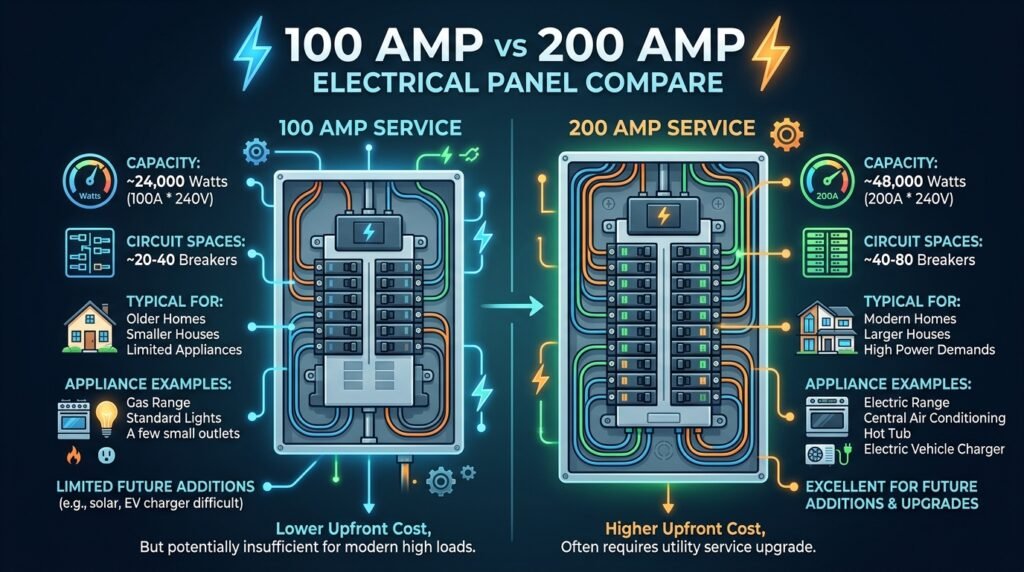
| Feature | 100-amp service | 200-amp service |
| Common fit | Smaller homes with fewer electric loads | Homes with several large electric loads |
| Future room | More limited during major additions | Better room for planned electrification |
| Large equipment | May need load management | Often supports more equipment together |
| Project scope | Panel work may be simpler | Conductors and meter work may change |
Does a larger panel always provide more circuit spaces?
Many 200-amp panels include more spaces, but amperage and spaces are different. A panel can have open spaces while the service remains fully loaded. A smaller panel can run safely when demand stays within its rating. Your electrician must review spaces and total demand.
What equipment must match during an upgrade?
A proper 200 amp electrical panel installation may involve more than the indoor panel. The service conductors, meter base, main breaker, and panel bus must match. Grounding and bonding may also need updates. Duquesne Light recommends 200-amp underground service conductors, but that recommendation doesn’t require every home to use 200-amp service.
How does project cost affect the choice?
Keeping 100 amps may cost less when the existing service remains safe. Costs rise when crews replace the meter base, conductors, or outside equipment. An upgrade electrical panel to 200 amps project may also need utility coordination. Compare written scopes because each quote may include different work.
Which Pittsburgh Projects Can Change Your Decision?
What happens when you finish a basement or kitchen?
A finished basement may add bedrooms, a bathroom, laundry, and electric heating. A kitchen project may add ovens, an electric range, and countertop circuits. These loads can change your residential load calculation. Plan the service review before walls, cabinets, and finishes limit access.
What happens when you add cooling or a heat pump?
Central air adds a large motor load during warmer months. A heat pump can add demand, especially when backup heat uses electricity. Duquesne Light calls for service sizing calculations when permanent electric space heating is installed. The required size depends on heating load and total home demand.
What happens when you add an EV charger or generator?
An EV charger can draw power for several hours during charging. Load management may allow charging without a 100 to 200 amp service upgrade. A whole-home generator also needs careful sizing and transfer equipment planning. Ask one contractor to review these connected plans together.
How Should You Choose the Correct Service Size?
Why should the process start with a load calculation?
A residential load calculation reviews home size, fixed appliances, heating, cooling, and other loads. NFPA guidance explains that service sizing uses calculated loads instead of adding every breaker rating. This method helps prevent both undersizing and needless upgrades. Ask for the result instead of accepting a verbal guess.
What should the electrician inspect before giving a quote?
The contractor should inspect the panel, service conductors, meter base, and grounding. They should confirm the main breaker and panel bus ratings. The estimate should explain whether work covers only the panel or full service. It should also list permits, inspections, utility steps, and possible repairs.
Which local steps should you expect?
Pittsburgh requires residential electrical permits for service and distribution changes. Duquesne Light accepts requests for service increases, relocations, and other service work. The utility requires approved inspection before certain final connections. Your licensed electrical contractor should manage these steps and explain the schedule.
What Do Pittsburgh Homeowners Ask About Service Size?
Is a 100-amp panel enough for central air conditioning?
It can be enough when other large electrical loads remain limited. The answer depends on cooling size, appliances, heating, and current demand. A load calculation should confirm capacity before central air installation begins.
Can I add an EV charger to 100-amp service?
Sometimes, especially when the home has lower demand or managed charging. A contractor must check panel spaces, wiring, and available service capacity. Don’t assume charger installation always requires a 200-amp upgrade.
Is 200 amps better for a finished basement?
It may help when the project adds electric heat, laundry, or kitchen equipment. A simple recreation room may add much less electrical demand. Plan the basement circuits before choosing the final service size.
How do I know my current electrical service size?
Check the main breaker rating only when you can view it safely. That number may show 100, 150, or 200 amps. An electrician should confirm that the panel and service equipment match.
What is involved when I upgrade electrical panel to 200 amps?
Work may include the panel, conductors, meter base, grounding, and breakers. Utility coordination, permits, and inspections may also be required. The scope depends on your service and property layout.
Should I choose 200 amps for future electrification?
Choose it when realistic plans and calculations support the added capacity. Future heat pumps, electric appliances, and vehicle charging can make 200 amps useful. Don’t pay for a larger service only because it sounds modern.
The 100 amp vs 200 amp electrical panel decision should come from facts, not fear. A 100 amp electrical panel may still fit a smaller gas-equipped home. A 200 amp electrical panel installation can help when planned loads need more capacity. Start with a professional calculation, then choose the safest practical service.