
Finding an unfamiliar panel brand can make any homeowner feel worried. A Federal Pacific electrical panel or another older box deserves careful review, not instant panic. The brand name alone can’t show the panel’s full condition.
This guide covers Federal Pacific electrical panels, the Zinsco electrical panel, and other aging brands. You’ll learn how to spot labels without removing covers or touching live parts. You’ll also learn what makes an old electrical panel worth inspecting or replacing.
Pittsburgh’s housing age makes this topic especially useful for local owners. More than 60% of city homes were built before 1950, according to Allegheny County. Older homes can contain equipment from several updates completed across many decades. By the end, you’ll know which signs need fast professional attention.
Why Do Older Electrical Panel Brands Matter in Pittsburgh Homes?
Why doesn’t age alone prove that a panel is unsafe?
Why this matters is that old equipment can remain different from damaged equipment. A clean outdated electrical panel may still need review because age affects parts and service options. Yet, homeowners shouldn’t call every older box an unsafe breaker panel without an inspection. A licensed electrician must check the equipment, breakers, wiring, and service conditions.
Why does reliable breaker operation matter so much?
Benefits are clear because breakers should open when a circuit carries unsafe current. A breaker failure can let wires stay overloaded longer than intended. Heat can then damage insulation, connections, or nearby panel parts. An electrician checks breaker fit, signs of overheating, and the condition of the bus bar.
Why do obsolete replacement parts affect repair choices?
Important because an older panel may need parts that manufacturers no longer make. Available parts may be used, rebuilt, or made by another company. Your electrician should confirm that every breaker is approved for that exact panel. When safe parts aren’t available, replacement may offer a clearer long-term solution.
How Can You Identify an Old Electrical Panel Safely?
Where should you look for the brand name?
You can often read the brand on the panel door, handle, or inside label. Open only the normal hinged door used to reach breaker handles. Don’t unscrew or remove the metal service-panel cover. CPSC guidance says cover removal belongs to a qualified electrician.
Which labels can identify Federal Pacific or Zinsco equipment?
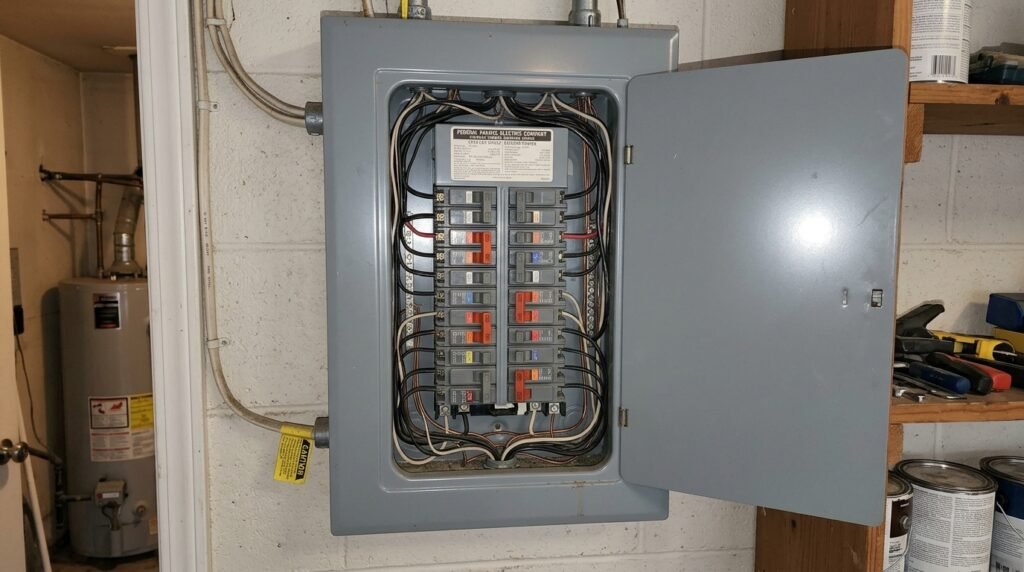
A Federal Pacific label may show “Federal Pacific Electric,” “FPE,” or “Stab-Lok.” A Stab-Lok electrical panel may also have those words near its breaker list. A Zinsco electrical panel may show Zinsco, Sylvania, or Zinsco-Sylvania. Take a clear photograph from a safe distance for your electrician.
Which other names might appear in Pittsburgh houses?
Labels may show Challenger, Pushmatic, Bulldog, Wadsworth, Bryant, or I-T-E. A Challenger electrical panel may display its name on the handle or door label. A Pushmatic electrical panel often has easy-to-see brand wording near its controls. Don’t touch breakers that feel loose, damaged, or unusually hot.
What Should You Know About a Federal Pacific Electrical Panel?
What did the CPSC investigation actually find?
The CPSC studied Federal Pacific Electric Stab-Lok residential breakers during the early 1980s. Testing found that certain breakers failed some UL calibration test requirements. However, the agency closed its investigation without deciding that all FPE breakers were safe or unsafe. That careful finding doesn’t support either panic or complete dismissal.
Does every FPE panel have an electrical panel recall?
No single statement should treat every FPE box as one broad electrical panel recall. The CPSC notice describes an investigation, testing concerns, and an uncertain final safety finding. It focused mainly on two-pole residential breakers made before a 1979 ownership change. A Federal Pacific electrical panel still deserves professional review based on its model and condition.
What should an electrician check inside an FPE panel?
The electrician should look for breaker failure, loose fit, heat damage, and electrical arcing. They should also inspect the bus, terminals, wiring, grounding, and breaker sizes. Burn marks or a corroded bus bar may support replacement instead of limited repair. Homeowners shouldn’t remove breakers or test internal parts themselves.
How Should Zinsco, Challenger, Pushmatic, and Other Panels Be Handled?
What should you do after finding a Zinsco-Sylvania label?
Don’t assume the label alone proves an immediate emergency. Book a panel inspection that checks breaker movement, contact points, heat, and bus condition. Ask whether suitable replacement parts remain available for that exact model. A damaged Zinsco electrical panel may need replacement after the electrician documents its condition.
Does every Challenger panel fall under the same recall?
No, a past CPSC recall covered specific Challenger HAGF GFCI breakers, not every panel. The affected breakers had certain yellow test buttons and other listed markings. The agency told owners to contact a licensed electrician for replacement work. Your Challenger electrical panel needs model-based review instead of a brand-only judgment.
What about Pushmatic, Wadsworth, Bryant, and fuse panels?
A Pushmatic electrical panel, Wadsworth panel, or Bryant electrical panel may still work today. The main questions involve condition, capacity, breaker availability, and past changes. A fuse panel also isn’t automatically defective simply because it uses fuses. Inspection helps determine whether repair, monitoring, or replacement makes practical sense.
Which Warning Signs Need Urgent Professional Attention?
Which heat, odor, and sound warnings require quick action?
Call an electrician quickly for burning smells, buzzing sounds, hot metal, or visible smoke. Scorch marks, melted parts, and crackling can point toward serious overheating. ESFI advises inspection when homeowners notice burning odors, buzzing, warmth, or discoloration. Call emergency services when you see smoke, flames, or immediate fire danger.
What do repeated trips and flickering lights suggest?
Frequent trips can point toward overloaded circuits, bad equipment, or wiring problems. Flickering lights can also come from loose connections or changing electrical demand. Don’t keep resetting a breaker without learning why it opened. CPSC guidance says repeated trips should lead to checking the cause or calling an electrician.
Why do rust and corrosion matter in local basements?
A panel in a damp Pittsburgh basement may face leaks or ongoing moisture. Rust outside the box may signal water exposure that needs closer inspection. Corrosion inside can affect connections, breakers, and the panel bus. Fix the moisture source and let an electrician judge the electrical damage.
What Happens During Inspection or Panel Replacement?
What does a complete panel inspection include?
A licensed electrician starts with the brand, model, rating, and visible condition. They check circuit labels, breaker sizes, available spaces, and signs of past repairs. Internal work may include testing connections, breaker fit, grounding, and bus condition. The inspection should end with clear repair and replacement options.
How can you discuss insurance and home-sale concerns?
Ask your insurer whether it needs photos, an inspection report, or replacement records. Requirements can differ between carriers, policies, and individual properties. During a sale, keep permits, inspection results, and paid invoices together. Written records explain what a licensed electrician found and corrected.
Which Pittsburgh rules apply to replacement work?
Pittsburgh requires residential electrical permits for repairs, changes, and new electrical systems. Panel replacement will usually involve work covered by those permit rules. Ask who will obtain the permit and schedule each required inspection. An electrician should also explain whether utility coordination affects the project.
What Do Homeowners Ask About Older Electrical Panels?
Is every Federal Pacific electrical panel dangerous?
No official finding says every panel has the same present condition. The CPSC found calibration concerns but didn’t make a final safety determination. Have a licensed electrician inspect the panel and explain any risks found.
Should I replace a Zinsco electrical panel immediately?
Don’t choose replacement from the brand label alone. Schedule an inspection for heat damage, breaker problems, bus wear, and part availability. Urgent symptoms can make faster action necessary.
Is a Challenger electrical panel included in a recall?
One CPSC recall covered specific Challenger HAGF GFCI breakers. It didn’t describe every Challenger panel as recalled. A licensed electrician can compare your exact breaker markings with recall details.
Can an electrician repair a Pushmatic electrical panel?
Repair may be possible when the equipment remains sound and correct parts exist. Replacement may make more sense when parts are scarce or damage appears. Ask for both options with clear reasons and costs.
How do I know whether my panel has obsolete breakers?
Write down visible names and model details without removing the cover. An electrician can check manufacturer information and approved replacement choices. Don’t buy a breaker only because it seems to fit.
When does an outdated electrical panel need fast replacement?
Fast action may follow burning odors, arcing, smoke, severe corrosion, or melted parts. Repeated breaker failure and major bus damage can also support replacement. Let an electrician inspect the panel before choosing the final scope.
An older brand should start a careful review instead of an automatic conclusion. A Federal Pacific electrical panel or another aging box needs attention based on evidence. Safe identification, professional inspection, and clear records help you make the right choice.