
Your home may need more power than its old breaker box can safely supply. This electrical panel upgrade guide explains what local homeowners should check before problems grow. You’ll learn when to upgrade electrical panel equipment, replace it, or repair it.
Many older Pittsburgh homes predate central air, electric dryers, and vehicle chargers. This electrical panel upgrade guide covers warning signs, costs, permits, and inspections. It also explains how a residential electrical panel connects with your meter and service cable.
You’ll get clear facts that help you plan a safer project. By the end, you’ll know which questions to ask before hiring an electrician.
What Does This Electrical Panel Upgrade Guide Help You Understand?
What does your electrical panel actually do?
Your main service panel sends power into separate circuits throughout your home. Each breaker should stop power when wiring becomes overloaded or develops a fault. The bus bar carries power, while breakers protect connected wires and devices. A safe residential electrical panel also needs correct grounding, bonding, labels, and covers.
Why does electrical service capacity matter?
Panel amperage shows how much current your service can handle safely. Older homes may have 60-amp service, while many use 100-amp service. Larger homes and electric equipment may need 150-amp or 200-amp service. An electrician uses a load calculation instead of guessing from size.
Which parts can change during an upgrade?
A complete electrical service panel upgrade may involve more than the indoor panel. Work can include the meter socket, service cable, grounding, and main disconnect. New breakers may include AFCI or GFCI protection where codes require them. Duquesne Light also sets rules for conductors, meter placement, and final connections.
Why Do Electrical Panel Upgrades Matter for Older Homes?
Why does panel safety matter every day?
Why this matters is simple: weak connections can create dangerous heat. Frequent trips, buzzing, rust, scorch marks, or burning smells need quick attention. You shouldn’t remove the cover because live parts can remain dangerous. A trained electrician can test the panel without risking your safety.
Why does circuit space matter during renovations?
Benefits are clear when projects add kitchens, bathrooms, heating, or workshop equipment. Each new load needs enough capacity and the correct breaker protection. A crowded panel may lack safe spaces for new circuits. Early planning prevents delays after walls, cabinets, or finishes are installed.
Why does future power demand matter now?
Important because electric vehicles, heat pumps, hot tubs, and ranges add large loads. A Level 2 charger may fit on 100 amps when calculations allow it. Some homes need 200 amps, while others can use managed charging. The right choice protects your budget without buying unused capacity.
Should You Repair, Replace, or Upgrade Electrical Panel Equipment?
When can a panel repair solve the problem?
A repair may work when one approved breaker fails inside a sound panel. A damaged door or one worn part may also need limited service. The electrician should inspect the bus bar, connections, and panel condition. Repair won’t solve low service capacity or widespread heat damage.
When does electrical panel replacement make better sense?
Replacement makes sense when a panel is damaged, corroded, crowded, or hard to service. It also helps when approved breakers are difficult to find. Federal Pacific Stab-Lok and Zinsco or Sylvania panels need professional review. Federal officials found some FPE breakers missed calibration rules, while insurers warn about Zinsco risks.
When does the whole electrical service need upgrading?
A full home electrical panel upgrade changes capacity, not only the breaker box. The cable, meter socket, disconnect, and grounding may need matching changes. Utility coordination is needed because the home must be disconnected safely. Duquesne Light requires an approved inspection before making final connection.
Should Your Home Use 100 Amps or 200 Amps?
When can 100-amp service still work?
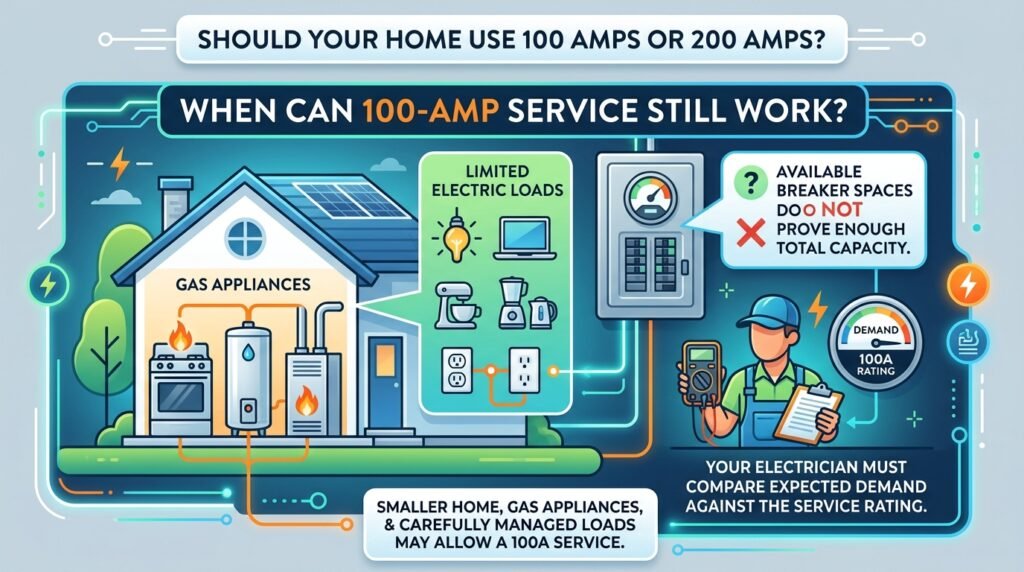
A 100-amp service can work for a smaller home with gas appliances. It may also work when planned electric loads remain limited and well managed. Available breaker spaces don’t prove the service has enough total capacity. Your electrician must compare expected demand against the service rating.
Why do many homeowners choose 200-amp service?
A 200-amp service gives more room for renovations and future electric equipment. Duquesne Light recommends conductors rated at least 200 amps for many underground residential services. That recommendation doesn’t mean every home automatically needs a 200-amp panel. Your final choice should follow the load calculation and project plans.
How do 100 amps and 200 amps compare?
| Feature | 100-amp service | 200-amp service |
| Best fit | Smaller homes with fewer electric loads | Larger homes or planned electric upgrades |
| Future room | Limited without load management | Better room for added circuits |
| Project cost | Usually lower when service stays unchanged | Usually higher when service equipment changes |
| Common uses | Gas heat, standard appliances, light additions | EV charging, heat pumps, additions, electric cooking |
The best Pittsburgh electrical panel upgrade isn’t always the largest option available. Ask for a written load calculation that includes planned appliances and charging equipment. This shows whether 100 amps remains enough or 200 amps makes sense. It can also uncover overloaded circuits that need work before any upgrade.
How Much Does a Pittsburgh Panel Project Cost?
What does a basic panel job usually cost?
Published 2026 guides place panel projects around $1,200 to $2,000 dollars. Simple same-capacity work may stay near that range when wiring remains sound. Full service changes cost more when outside equipment also needs replacement. Local bids should list labor, materials, permits, and inspection costs.
Which factors can raise the final price?
Pittsburgh winters and damp basements can expose old service parts to moisture and rust. Costs rise when crews replace the meter socket, service mast, grounding, or damaged circuits. AFCI and GFCI breakers also cost more than standard breakers. Drywall repair, trenching, utility work, and emergency scheduling can increase the total.
How can you control the project budget?
Get three written quotes using the same work list and panel size. Ask each electrician to separate panel work from rewiring and surge protection. Confirm whether quotes include permits, inspections, utility coordination, and cleanup. Don’t choose low bids that leave important service parts outside scope.
What Should Pittsburgh Homeowners Expect During Installation?
Which permits and inspections are required?
The city requires residential electrical permits for repairs, changes, extensions, and new systems. Permit holders must request inspections through the city’s OneStopPGH process. All PLI permits need inspection, and same-day inspections aren’t available. Outside Pittsburgh, check your Allegheny County municipality because local steps differ.
What happens during electrical panel installation?
The electrician inspects the service, completes a load calculation, and confirms utility needs. Next, the crew gets permits and schedules the required power disconnect. They replace equipment, label circuits, test connections, and arrange inspection. Final utility connection follows after required wiring approval for Duquesne Light work.
What should you ask a licensed electrician?
Ask who will pull the permit and who will schedule each inspection. Request the exact panel brand, amperage, breaker types, warranty, and surge protection details. Ask whether grounding, bonding, meter equipment, and service cable are included. The city issues electrical trade licenses to qualified people who perform permitted electrical work.
What Questions Do Homeowners Ask Most Often?
What is the best panel size for most homes?
Many modern homes use 200-amp service, but your needs may be different. A smaller home with gas appliances may work safely with 100 amps. Ask for a load calculation before choosing either service size.
How much should I budget for a panel upgrade?
Start with at least $1,200 to $2,000 dollars for straightforward professional panel work. Full service changes can cost more when exterior equipment or wiring needs replacement. Get detailed local quotes before setting your final project budget.
Is electrical panel replacement different from a service upgrade?
Yes, a panel replacement can keep the same service capacity and rating. An electrical service panel upgrade raises capacity and may change cables, meters, and disconnects. Your written quote should clearly explain which project you’re buying.
How should I care for a new panel?
Keep the panel dry, clear, labeled, and easy to reach. Don’t store boxes or flammable supplies directly around the equipment. Call an electrician when breakers trip often or the panel shows heat damage.
How do I choose the right electrician?
Choose a properly licensed electrician who handles permits and utility coordination. Compare written scopes instead of comparing only the final prices. Check warranties, insurance, timelines, and the exact equipment being installed.
When should I schedule a Pittsburgh electrical panel upgrade?
Schedule service before adding an EV charger, major appliance, addition, or electric heating system. Call sooner when you notice heat, rust, buzzing, burning smells, or repeated trips. Early planning gives you more time for permits, inspections, and utility scheduling.
A safe electrical panel upgrade guide should remove fear and guesswork. Good electrical panel installation starts with clear loads, costs, permits, and inspections. A home electrical panel upgrade can support today’s needs and tomorrow’s changes.