
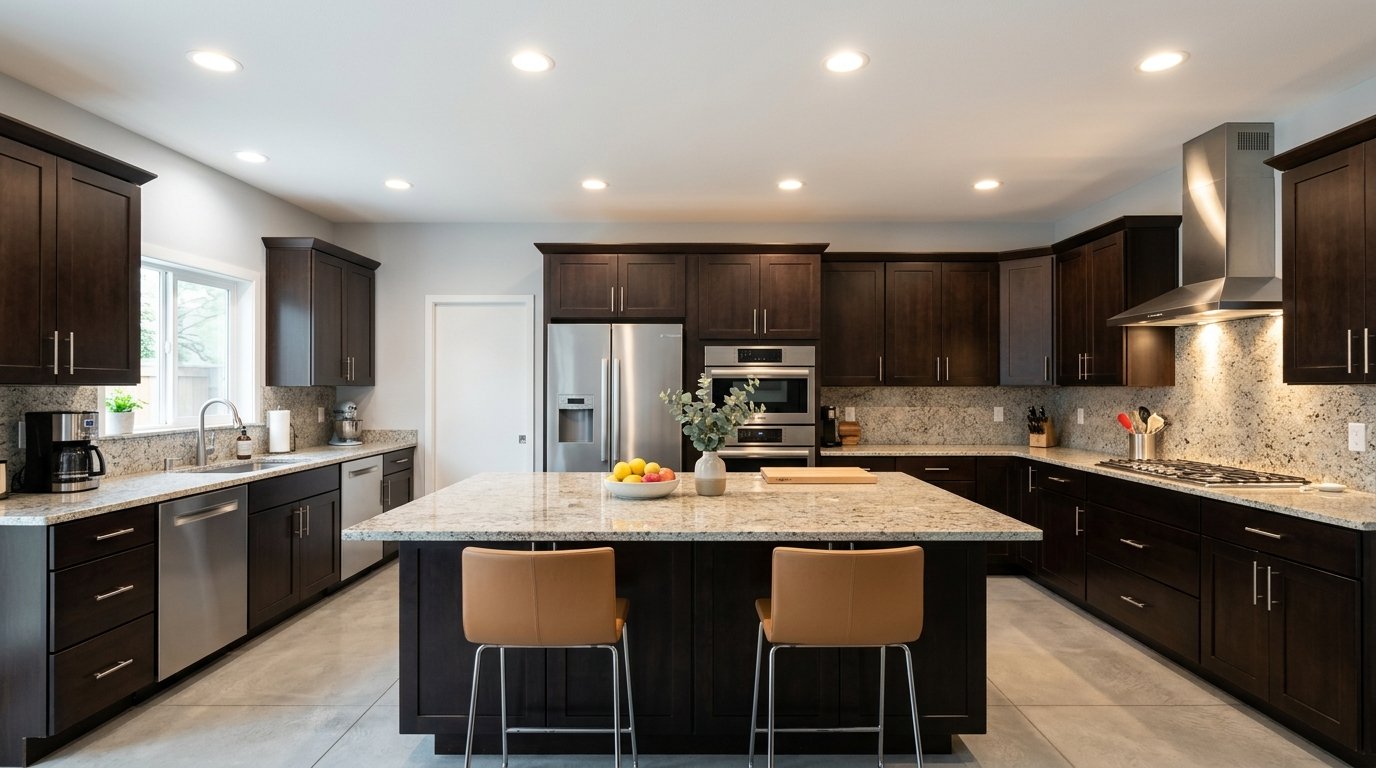
Recessed lights look sleek. They sit flat in your ceiling. No bulky fixture hanging down. That’s why Pittsburgh homeowners love them for kitchens and bathrooms.
But here’s the thing. Installing recessed lighting in Pittsburgh isn’t just about poking holes in drywall. You need the right spacing. The holes have to be straight and clean. The wiring has to be safe. Mess it up and your room either feels too dark or too bright.
This page breaks down recessed lighting installation in Pittsburgh. What it is. Why it works. How spacing works. And why you should hire a pro instead of trying it yourself.
What Are Recessed Lights?
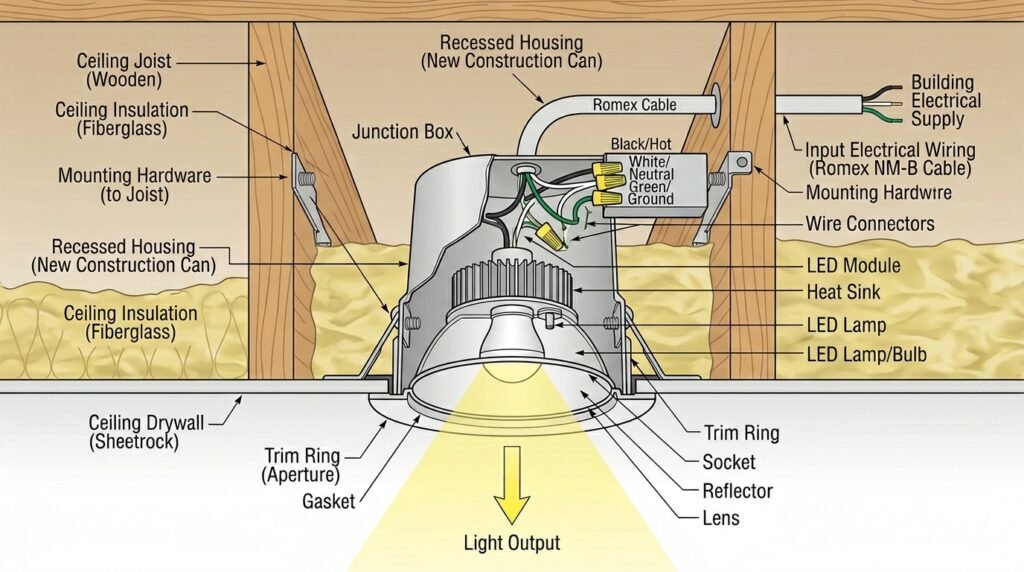
Recessed lights hide inside your ceiling. The bulb and trim ring are all you see. Everything else sits above the drywall.
This gives you a clean look. Your ceiling doesn’t feel crowded. Light spreads evenly across the room. It feels intentional.
Recessed lights work well for:
- Kitchens with work areas
- Bathrooms with mirrors
- Living rooms that want modern style
- Basements and finished spaces
- Hallways and entryways
Unlike hanging fixtures, recessed lights don’t draw your eye up. They blend in. Your focus stays on the room itself.
Why Pittsburgh Homeowners Choose Recessed Lighting
Pittsburgh homes come in all ages and styles. Some have low ceilings. Some have older plaster. Recessed lighting fits any situation.
Here’s why people pick recessed lights:
- Clean, modern look
- Works in any room style
- Doesn’t take up ceiling space
- Spreads light evenly
- Good for low ceilings
- Can highlight artwork
- Easy to add dimmer switches
Recessed lighting also adds value to your home. Buyers see it as an upgrade. It shows your home is updated and cared for.
In older Pittsburgh homes, recessed lights modernize spaces fast. You don’t have to tear things apart. Just add clean, simple lighting.
Recessed Lighting Installation vs. DIY
You might think this is easy. Cut a hole. Drop in a light. Done.
Not really.
The hard part is planning. Where lights go matters. How far apart they sit matters. If they’re too far apart, you get dark spots. If they’re too close, the light feels harsh and shadows pop out everywhere.
Here’s what professional recessed lighting installation in Pittsburgh includes:
- Spacing that’s calculated right for your ceiling height
- Holes cut clean without cracking drywall
- The right fixture for your room size
- Proper insulation around lights
- Safe wiring that follows code
- Lights lined up so it looks intentional
A pro has done this many times. They know the math. They know how to cut drywall without mistakes. They know which fixtures work best for different rooms.
DIY usually means lights are spaced wrong. Or holes crack the drywall around them. Or wiring doesn’t meet code. A professional gets it right the first time.
Planning Your Recessed Lighting Layout
Good recessed lighting installation in Pittsburgh starts with a solid plan.
Get the Spacing Right
Spacing depends on how high your ceiling is. Here’s the basic rule: take your ceiling height and multiply it by 1.5.
If your ceiling is 8 feet, space lights about 12 feet apart. If it’s 9 feet, space them 13.5 feet apart. If it’s 10 feet, space them 15 feet apart.
This spacing keeps light even without dark gaps or harsh spots.
Match the Room Type
Different rooms need different amounts of light. A kitchen needs bright light for cooking. A living room needs softer light.
Kitchen recessed lighting usually clusters more lights over countertops and islands. Living rooms spread lights out more. Bathrooms focus lights around mirrors for grooming tasks.
Pick Your Trim Ring Style
The trim ring is what you see in the ceiling. Different styles affect how light spreads.
Open trim lets more light out. Baffle trim cuts glare. Wall wash trim highlights features or accent walls.
Your Pittsburgh recessed lighting installer shows you options. They help you pick what works best.
Plan for the Future
Leave room if you want to add more lights later. A smart layout is easy to expand.
How Recessed Lighting Installation Works
Here’s what happens when a pro installs your lights.
Step 1: Mark the Spots
Your installer marks exactly where each light goes. This ensures proper spacing and a straight line.
Step 2: Cut the Holes
Using a drywall saw, holes get cut at each mark. A pro cuts clean circles without cracking surrounding drywall.
Step 3: Run the Wires
Wiring runs through the attic or space above the ceiling. It connects safely to your breaker panel.
Step 4: Install the Housing
The light housing gets pushed into each hole. It’s secured to the framing above.
Step 5: Wire Each Light
Each light gets wired inside its housing. Everything is tested.
Step 6: Add the Trim Ring
The trim ring gets installed. This frames the opening and finishes the look.
Step 7: Install Bulbs and Test
Bulbs go in. All lights get tested to make sure they work.
Step 8: Final Check
The installer checks spacing, brightness, and alignment. Everything looks even and works right.
A typical room takes one day. Larger projects take longer.
Recessed Lighting in Pittsburgh Basements
Pittsburgh basements are great spaces to finish. Many people add recessed lighting when they remodel.
Recessed lights work perfect in basements because:
- They don’t steal headroom from low ceilings
- They light the whole space evenly
- They hide wires in the ceiling cavity
- They look finished and clean
Basement lighting often mixes bright general lights with softer accent lights. Brighter lights over seating. Softer lights in corners. This creates nice depth and atmosphere.
Recessed Lighting in Kitchens
Kitchens are the number one room for recessed lighting installation in Pittsburgh.
Why? Kitchens need bright, even light for cooking and food prep. Recessed lights provide that without a big fixture hanging over your island or table.
A typical kitchen layout has:
- Lights spaced evenly across the ceiling
- Extra lights clustered over counters and islands
- Dimmer switches so you can adjust brightness
- Lights positioned to avoid glare on countertops
Good kitchen recessed lighting feels natural. It’s bright enough to work comfortably. It doesn’t feel harsh or create weird shadows.
Recessed Lighting in Bathrooms
Bathrooms need good, clear light for grooming.
Bathroom recessed lighting installation in Pittsburgh usually includes:
- Lights positioned around mirrors for even facial light
- General ceiling lights for the whole bathroom
- Waterproof fixtures rated for moisture and humidity
Bathroom recessed lighting should feel welcoming, not like a doctor’s office. The right spacing and bulb type creates a nice balance.
LED vs. Traditional Bulbs for Recessed Lights
Most recessed lighting installation in Pittsburgh today uses LED bulbs.
LEDs give you:
- 75% less electricity use than old incandescent bulbs
- Lifespan of 10-20 years instead of 1-2 years
- Better light quality
- Less heat in your ceiling
- Dimmer switches work with most LEDs
Old incandescent bulbs cost less upfront. But you pay more to run them. You replace them constantly.
LED recessed lighting in Pittsburgh saves money on your electric bill. You change bulbs way less often. The light quality is noticeably better.
How Much Does Recessed Lighting Cost in Pittsburgh?
Price depends on how many lights you add and how complicated the wiring is.
Costs go up with:
- Number of fixtures you’re installing
- Type of ceiling (drywall, drop ceiling, plaster)
- How hard it is to reach your attic
- Whether you need new circuits
- Quality of the fixtures
- Style of trim rings
One recessed light costs maybe $75-150 installed. A full kitchen with 8-12 lights might be $800-2000. Costs vary.
Always get a written quote. It should show labor and materials separately. This tells you exactly what you’re paying for.
Energy Savings with Recessed Lighting
LED recessed lights use way less electricity. They also make less heat.
In Pittsburgh, where heating bills get high, this matters. Lower power use means lower electric bills. The savings add up over years.
Many Pittsburgh homeowners choose recessed lighting partly for energy savings. You get a modern look and a smaller utility bill.
Common Installation Mistakes
Bad recessed lighting installation creates real problems.
Mistakes include:
- Lights too far apart (dark spots appear)
- Lights too close together (harsh, glary feeling)
- Holes cut unevenly (looks sloppy)
- Wiring that breaks code (fire risk)
- Wrong fixture for the room (too bright or too dim)
- Bad trim ring choice (creates glare in your eyes)
- No dimmer option (can’t adjust the mood)
A pro avoids all of this. They get it right the first time.
Attic Access and Older Pittsburgh Homes
Pittsburgh homes vary by age. Older homes and newer homes have different ceilings.
Older Pittsburgh houses might have:
- Hard-to-reach attic spaces
- Solid framing that’s tricky to work around
- Plaster ceilings instead of drywall
Newer homes usually have:
- Easier attic access
- Open cavity spaces
- Drywall ceilings
A pro electrician looks at your specific home. They work around your actual ceiling type. This keeps installation smooth without surprises.
Using Dimmer Switches
Dimmer switches pair great with recessed lighting. They let you change brightness for different times of day or moods.
Not all dimmers work with all bulbs. LED dimmers are different from incandescent dimmers.
Your Pittsburgh recessed lighting installer recommends the right dimmers. Proper installation means smooth operation and long bulb life.
After Installation Care
Once your lights are installed, maintenance is minimal.
Just do this:
- Replace bulbs when they burn out (every 10-20 years with LED)
- Wipe trim rings occasionally (dust builds up)
- Check for loose fixtures (rare, but check sometimes)
LED bulbs last so long that you barely think about replacement. Super low maintenance.
Ready for Recessed Lighting in Pittsburgh?
Recessed lighting changes how a space looks. Kitchens feel bigger. Basements look finished. Bathrooms look current.
Professional recessed lighting installation in Pittsburgh means proper spacing, clean cuts, safe wiring, and beautiful results. You get a modern look. Your home value goes up. The functionality improves.
Think about which rooms you want to update. Get a pro to evaluate your space. Plan your layout carefully. Then enjoy the clean, simple look of professionally installed recessed lighting.
Frequently Asked Questions
How many recessed lights do I need?
Use the spacing rule. Take your ceiling height and multiply by 1.5. That’s your spacing distance between lights. For an 8-foot ceiling, space lights about 12 feet apart. A pro can look at your room and tell you exactly how many you need for even light without dark spots.
Can I install recessed lights in a drop ceiling?
Yes. Drop ceiling installation is actually easier in some ways. The lights sit in the grid. No drywall cutting needed. Your Pittsburgh electrician can install them in drop ceilings fast.
What trim ring should I choose?
Trim rings affect how light spreads. Open trim lets more light out. Baffle trim reduces glare. Wall wash trim highlights walls or features. Your installer shows you options and helps you pick based on your room type.
Do recessed lights cause attic heat problems?
Modern recessed lights, especially LEDs, make very little heat. Proper insulation around fixtures stops any issues. Your installer makes sure fixtures are rated correctly and insulated. Attic heat buildup doesn’t happen.
Can I add more recessed lights later?
Yes. A good layout plan leaves room for future additions. You can add more lights later if your breaker panel has space. Talk to your installer about planning ahead for expansion down the road.