

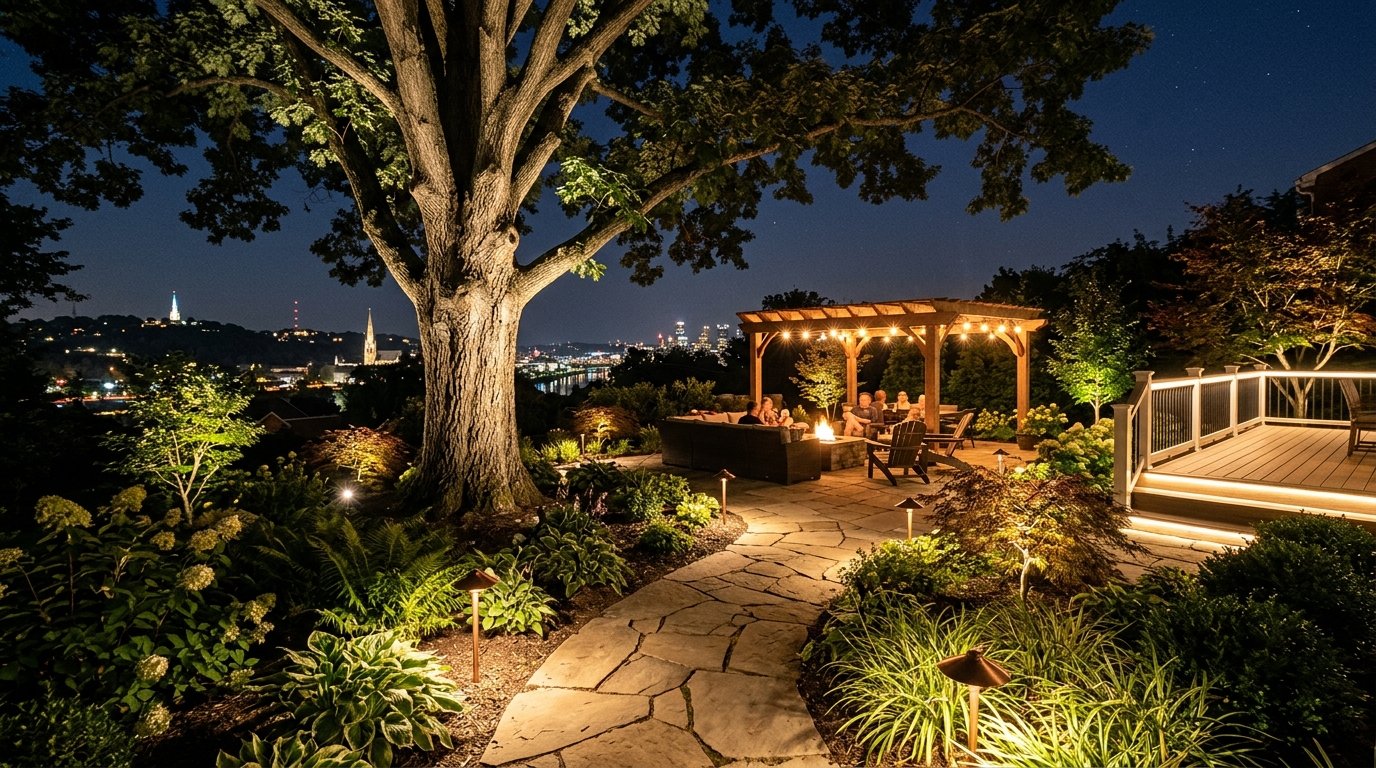
Your yard looks great during the day. But what about at night? Good landscape lighting changes everything. It makes your home safer. It highlights your best features. It creates atmosphere.
Landscape lighting installation in Pittsburgh isn’t just about throwing a few solar stakes in the ground. Professional outdoor lighting installer work includes planning, proper electrical connections, weather-resistant fixtures, and strategic placement. Done right, your yard becomes an extension of your home that looks amazing after dark.
This guide covers landscape lighting installation in Pittsburgh. Types of outdoor lighting. Why professional installation matters. And how to plan a system that works for your space.
What Is Landscape Lighting?
Landscape lighting highlights your yard’s best features. Trees. Pathways. Decks. Patios. Entry doors. Water features. Good lighting makes all of this visible and beautiful at night.
Landscape lighting serves two purposes. It improves safety by lighting walkways and steps. It also enhances curb appeal by showcasing your home’s best architectural features.
Common types of landscape lighting include:
- Pathway lights along walkways and driveways
- Uplights that highlight trees and shrubs
- Deck and patio lighting
- String lights for entertaining areas
- Entry lighting around doors
- Accent lighting on landscape features
- Security lighting for dark corners
A good landscape lighting system combines function and beauty. It lights practical areas while adding visual interest.
Why Professional Landscape Lighting Installation in Pittsburgh Matters
You could buy some solar lights at a home improvement store and call it a day. Many homeowners try this approach.
The problem? Solar lights are dim. They die on cloudy Pittsburgh days. They look cheap. They don’t highlight your best features effectively.
Professional landscape lighting installation in Pittsburgh includes:
- Strategic placement based on your home’s architecture
- Proper electrical connections with safe wiring
- Weather-rated fixtures that survive Pittsburgh winters
- Layered lighting that creates depth and interest
- Correct spacing and angles for even illumination
- Professional-grade equipment that lasts years
An outdoor lighting installer in Pittsburgh understands how light works. How angles affect what gets highlighted. How to balance brightness so it looks natural, not like a stadium.
Solar lights have their place. But professional hardwired lighting creates a system that actually works. Lights don’t fade. They’re bright enough to see by. They showcase your landscaping intentionally.
Types of Landscape Lighting for Pittsburgh Homes
Different outdoor spaces need different lighting approaches. A pathway needs different lighting than a tree. A deck needs different lighting than a garden feature.
Pathway and Walkway Lighting
Pathway lighting guides people safely. It lights steps, walkways, and driveways so nobody trips at night.
Pathway lights are typically:
- Low to the ground (12-24 inches tall)
- Spaced 3-5 feet apart
- Warm white color (not blue or harsh)
- Simple and unobtrusive
Good pathway lighting feels welcoming, not harsh. It’s bright enough to see where you’re stepping. It doesn’t blind you when you look at it.
Exterior lighting installation in Pittsburgh includes proper spacing so walkways feel safe without creating bright spots.
Tree and Shrub Uplighting
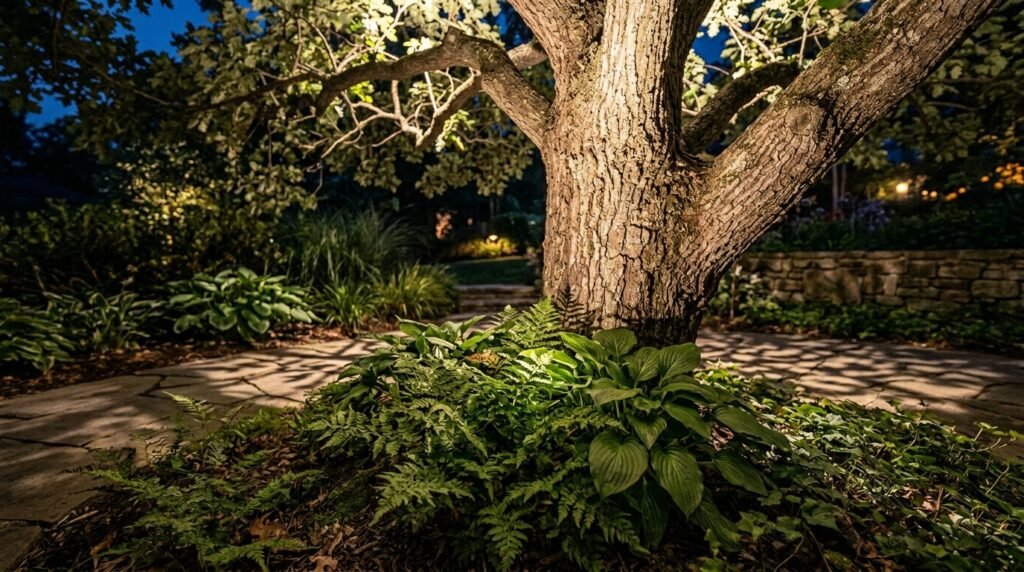
Uplighting illuminates trees from below. It highlights branching patterns at night. It creates dramatic silhouettes. It draws the eye to your landscaping.
Uplighting works best on:
- Mature trees with interesting shapes
- Evergreens for year-round interest
- Trees that frame your home
- Specimen plants you want to feature
An outdoor lighting installer in Pittsburgh positions uplights 3-5 feet from the tree base. The angle matters. Too steep and it looks harsh. Too shallow and it doesn’t highlight properly.
Uplighting transforms how your yard looks at night. Trees that are invisible in darkness suddenly become focal points.
Deck and Patio Lighting
Deck and patio lighting makes outdoor entertaining spaces usable after dark. It improves safety on stairs and railings. It creates atmosphere for gatherings.
Deck lighting options include:
- Lights mounted under railings
- Post-cap lights on railing posts
- Recessed lights in deck surfaces
- Pendant lights overhead
- String lights for parties
A good deck lighting system is functional and attractive. You can see where you’re stepping. The space feels inviting without being too bright.
Landscape lighting installation in Pittsburgh often includes deck lighting as part of a larger system.
String Light Installation
String lights add charm and create ambiance. They’re perfect for entertaining areas, patios, and outdoor dining spaces.
String lights work well for:
- Backyard gatherings
- Patio and deck entertaining
- Creating cozy atmosphere
- Garden areas
- Wedding and event spaces
Outdoor string light installation in Pittsburgh requires proper electrical connections. Lights need to be hung at the right height and angle. Wiring must be weather-protected.
Professional string light installation ensures lights work reliably and look intentional, not haphazard.
Entry Door and Feature Lighting
Lighting around your entry door creates a welcoming feeling. It highlights architectural features. It improves security by showing who’s at your door.
Entry lighting typically includes:
- Sconces beside the door
- Uplighting on the entry structure
- Pathway lighting leading to the door
- Accent lighting on landscaping near the entry
Good entry lighting is bright enough to see clearly. It’s warm and welcoming, not cold or harsh.
Roofline Lighting
Roofline lighting highlights your home’s architecture. It creates silhouette effects. It shows off your home’s best features.
Roofline lighting installation in Pittsburgh includes:
- Lights along gutters or fascia
- Uplights that illuminate the roofline
- Spotlights positioned to highlight peaks or details
Roofline lighting is subtle during the day. At night, it transforms how your home looks. It adds polish and shows your home is well-maintained.
Planning Your Landscape Lighting System
Good landscape lighting installation in Pittsburgh starts with a plan.
Walk Your Yard at Night
Before planning, walk around your yard after dark. What do you want people to see? What areas feel unsafe? What features do you want to highlight?
Identify Focal Points
What are your yard’s best features? Mature trees? Stone walls? Garden beds? Entry architecture? These become your focal points.
Consider Function and Beauty
Some lighting is purely functional. Pathways need to be safe. Decks need to be visible. Other lighting is purely decorative. It highlights features and creates atmosphere.
The best systems balance both. Safety and beauty work together.
Think About Layering
Professional landscape lighting uses layering. General ambient light. Task lighting for functional areas. Accent lighting for features. Together, they create depth and interest.
Plan for Electrical Connections
Professional landscape lighting installation in Pittsburgh requires safe electrical connections. You need:
- Proper wiring buried or protected
- GFCI outlets for safety
- Correct transformer sizing
- Proper circuit capacity
An outdoor lighting installer handles this. They ensure everything meets code and works reliably.
How Landscape Lighting Installation Works
Understanding the process helps you prepare.
Step 1: Site Assessment
Your installer walks your yard. They identify focal points, electrical access points, and challenges like trees or slopes.
Step 2: Design Plan
A design plan shows where lights go, what type, and how they connect. You approve before work begins.
Step 3: Mark Locations
Lights are marked where they’ll be installed. This is your chance to confirm placement before work starts.
Step 4: Run Electrical Wiring
Wiring is run from your electrical panel or a new circuit. It’s buried underground or hidden along structures.
Step 5: Install Fixtures
Pathway lights, uplights, and other fixtures are installed at marked locations.
Step 6: Test and Adjust
Lights are tested. Angles are adjusted. Brightness is confirmed.
Step 7: Final Walkthrough
You walk through your yard with your installer. Everything is confirmed to work as planned.
Most landscape lighting installation in Pittsburgh takes 1-3 days depending on system size.
Landscape Lighting for Pittsburgh’s Weather
Pittsburgh winters are harsh. Snow, ice, rain, and freezing temperatures test outdoor lighting.
Professional landscape lighting installation in Pittsburgh uses:
- Weather-rated fixtures that handle freeze-thaw cycles
- Sealed electrical connections protected from moisture
- Durable materials that resist rust and corrosion
- Proper grounding to prevent electrical issues
An outdoor lighting installer in Pittsburgh knows our weather. Fixtures are chosen and installed to survive what we throw at them.
LED vs. Traditional Landscape Lighting
Most professional landscape lighting installation in Pittsburgh today uses LED.
LEDs offer:
- 75% lower energy use than traditional bulbs
- Lifespan of 10-20 years
- Better light quality
- Less heat generation
- Brighter light for the power used
- Available in warm or cool color temperatures
Traditional outdoor lighting works too. It’s cheaper upfront. But you pay more in electricity. Bulbs burn out constantly.
LED landscape lighting in Pittsburgh is the smart choice. Lower energy bills. Less maintenance. Better results.
Low-Voltage vs. Line-Voltage Lighting
Landscape lighting comes in two types. Low-voltage uses 12 volts. Line-voltage uses standard 120 volts.
Low-voltage lighting:
- Uses less electricity
- Safer if wires get cut
- Good for smaller systems
- Easier to install in some cases
Line-voltage lighting:
- Brighter and more powerful
- Better for larger properties
- More complex installation
- Requires professional electrical work
An outdoor lighting installer in Pittsburgh recommends the right system for your property size and needs.
Cost of Landscape Lighting Installation in Pittsburgh
Cost depends on system size, complexity, and fixture quality.
Factors affecting cost:
- Number of fixtures
- Wiring distance and complexity
- Type of lighting (low-voltage or line-voltage)
- Fixture quality
- Terrain difficulty (trenching, slopes)
- New electrical circuit needed or existing
A small system with pathway lights might cost $500-1500. A larger system with uplighting, deck lights, and accent features might cost $2000-5000 or more.
Get a detailed quote showing labor and materials. This tells you exactly what you’re paying for.
DIY Solar Lighting vs. Professional Installation
You might see solar pathway lights at stores. They’re cheap and seem easy.
Here’s the reality. Solar lights don’t work well in Pittsburgh. Cloudy days drain them. They’re dim. They die after one season. They look cheap.
Professional landscape lighting installation in Pittsburgh solves these problems. Hardwired lights work every night. They’re bright enough to actually light your yard. They last years, not months.
Solar lights have a place for temporary use or remote areas. But for a real landscape lighting system, professional installation is the way to go.
Uplighting Your Best Features
Uplighting is one of the most dramatic landscape lighting techniques. It transforms how features look at night.
Uplighting works on:
- Large mature trees
- Stone walls or architectural details
- Water features like fountains
- Specimen plants or evergreens
- Rock formations or landscape features
An outdoor lighting installer in Pittsburgh positions uplights correctly. Too high and it looks harsh. Too low and it doesn’t highlight properly. At the right angle, uplighting creates stunning visual effects.
String Lights for Entertaining
String lights create atmosphere for outdoor entertaining. They make yards feel like outdoor rooms.
String light installation in Pittsburgh includes:
- Proper hanging at consistent height
- Safe electrical connections
- Weather-protected wiring
- Correct spacing for even light distribution
- Secure mounting that handles wind
Professional string light installation looks intentional. Lights are evenly spaced. Wiring is hidden. Everything feels planned, not thrown together.
Security and Safety Lighting
Landscape lighting improves security and safety. Well-lit yards deter problems. Lit pathways prevent trips and falls.
Security and safety lighting includes:
- Motion-activated lights in dark corners
- Bright lights near entry doors
- Well-lit pathways
- Illuminated steps and transitions
Motion lights add extra security. They activate when movement is detected. They discourage unwanted activity.
Maintaining Your Landscape Lighting System
Once installed, landscape lighting needs minimal maintenance.
Simple care includes:
- Clean fixtures occasionally (dirt reduces brightness)
- Check connections after heavy rain or snow
- Replace bulbs when they burn out (rarely with LED)
- Trim vegetation around lights so they’re not blocked
LED bulbs last so long that maintenance is mostly just keeping fixtures clean. Super low-maintenance once installed.
Ready for Professional Landscape Lighting in Pittsburgh?
Landscape lighting transforms your yard. It makes your home safer. It showcases your best features. It creates atmosphere for entertaining.
Professional landscape lighting installation in Pittsburgh ensures proper placement, safe electrical work, and results that look beautiful and work reliably. An outdoor lighting installer understands how to create a system that balances function and beauty.
Start by thinking about what you want to highlight. Get a professional assessment of your yard. Plan a system that works for your space. Then enjoy your yard after dark in a way you never could before.
Frequently Asked Questions
How do I choose what to light in my yard?
Walk your yard at night. What areas feel dark or unsafe? What features are you proud of? Those are your priorities. Pathways and steps need functional lighting. Mature trees and architectural features get accent lighting. A good landscape lighting system combines both.
Can landscape lighting work with Pittsburgh’s cloudy weather?
Absolutely. Professional hardwired landscape lighting works every night regardless of weather. Solar lights struggle in Pittsburgh’s cloudy conditions. Professional lighting is bright and reliable. Cloud cover doesn’t affect hardwired systems at all.
How far apart should pathway lights be spaced?
Pathway lights typically space 3-5 feet apart. This creates even light without dark gaps. The exact spacing depends on brightness level and fixture type. Your outdoor lighting installer calculates the right spacing for your pathways.
Can I add landscape lighting to an existing deck?
Yes. Landscape lighting can be added to existing decks. New fixtures mount under railings, on posts, or recessed into surfaces. Safe wiring is run to connect to your electrical system. An electrician checks your panel capacity before adding lights.
Is landscape lighting expensive to run?
LED landscape lighting uses very little electricity. A full system might add $5-15 per month to your electric bill depending on size and usage hours. That’s reasonable for the safety and beauty it adds. Many systems have timers so lights don’t run all night.